Robot-printed homes: why they haven’t delivered what was promised
Gino Torriero
Nello Build · Naples, Florida
CGC1536213
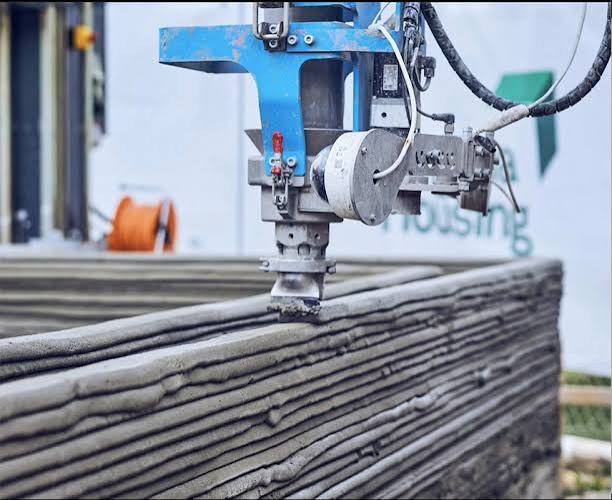
For about eight years, every few months a video has gone around showing a giant robot squeezing out a house like toothpaste, with a headline that says it was built in 24 hours for half the price. I have built for more than 30 years, and I watch those videos closely. Here is where the technology actually stands, and why the houses have not arrived the way the headlines promised.
A construction printer is a gantry or a robotic arm that lays down a cement mixture in layers, following a digital plan, to form the walls. That is the whole job. It does not pour the foundation, set the trusses, roof the house, run the wiring and plumbing, hang the windows, install the air conditioning or finish the inside. All of that is done by the same trades, in the same order, with the same inspections, as any other house.
So when a company says it printed a house in 24 hours, it means the printer ran for about a day, usually spread over a week or two of setup and curing. The largest printed neighborhood in the country, 100 homes outside Austin, Texas, took the printer about two weeks per house for the walls and then months of ordinary construction before anyone could move in. The first printed house in Kansas finished its print in March of this year and was still being worked on in October.
The walls are a modest share of what a house costs. Depending on who is counting, framing and exterior walls are something like 10 to 15 percent of the total. Even if the printer cuts that share in half, the roof, foundation, windows, mechanical systems, finishes, site work and land all cost exactly what they did before.
Then there is the machine itself. A construction printer runs well over a million dollars, needs trained operators, and often uses a proprietary mix that only the printer company sells. On a single house that cost is hard to recover. It starts to make sense when one crew prints a whole subdivision, which is why the real activity has been large builders doing dozens of houses at a time, not individual owners.
The results show it. The Texas homes sold from roughly $400,000 to $600,000, in line with the conventional homes around them. A printed house that went on the market in California this year was priced below the county median, but above the median per square foot. Some printed projects have genuinely saved money. Others have come out about even. None have delivered a house at half the cost.
Building codes are written around wood framing, masonry and poured concrete. A printed wall is none of those, so most projects go through an alternative materials approval with engineering specific to that mix and that printer. The first permitted printed house in Florida took its builders two years of back and forth with officials before it was approved in Tallahassee.
An appraiser needs comparable sales to value a house, and there are few comparable printed houses. Lenders and insurers are still working out how to treat them. Buyers can run into trouble getting a mortgage long before they run into trouble with the walls.
Printers are good at curves and poor at sharp corners and multiple stories. Most printed homes are one story, with simple plans and the layered texture left exposed. Changing the house later, moving a wall or adding a window, is harder in solid printed concrete than in a framed wall.
Once the shell is up, the project moves at the pace of trades, deliveries and inspections. That is the pace of every house in Southwest Florida, printed or not, and it is the part that decides the schedule.
Here the honest answer is: not yet. We are in a high-velocity wind region under the Florida Building Code, which has the strictest wind requirements in the country, and the code does not yet have a clear path for printed concrete walls. Each project would need its own engineering and its own approvals from the building department.
The irony is that the main thing a printed house promises, a solid concrete wall that stands up to wind, water and termites, is what we already build. Concrete block with reinforced cells and poured bond beams is the standard house in Collier and Lee counties, the trades know it, the code covers it, inspectors understand it, and insurers price it. The printer is trying to arrive at a result our market already has.
I am not dismissing the technology. Printers are getting faster and cheaper, codes are catching up, and in places with a severe shortage of masons and framers the shell speed is worth real money. Disaster recovery, where hundreds of simple houses are needed quickly, is a good fit. Printed foundations and small accessory units may become common before whole houses do.
But a house is a system, and the printer touches one part of it. The cost of a home in Naples is driven by land, flood elevation, wind engineering, impact glass, roofing, mechanical systems and skilled labor. No robot changes those. What does change them is a contractor who prices the whole job openly and knows which subcontractor gives the best value on each trade. That is how we work, at cost plus a fee with the books open, and it saves more on a Naples house today than any printer can.
If you are weighing how to build in Naples, Marco Island, Bonita Springs or Fort Myers, we are glad to talk through the options. Related reading: where AI is actually useful in construction, why construction costs are so high here and how long a custom home really takes to build.
The printer typically finishes the walls of a one-story house in one to three weeks of printing. The finished house takes months, because the roof, windows, electrical, plumbing, air conditioning, finishes and inspections are still done by conventional trades.
Sometimes, and usually less than advertised. The printer replaces the wall framing, which is a modest share of a home’s cost. Everything else is priced the same as any other house. Some projects have saved money; others have cost about the same as conventional construction.
Not easily yet. Southwest Florida is a high-velocity wind region, and the Florida Building Code does not yet have a straightforward path for printed concrete walls, so each project needs engineering and approvals worked out with the building department.
Solid concrete walls are a real advantage for wind, water and termites, which is why concrete block is already the standard in Southwest Florida. The printed wall still needs reinforcing, engineering and a roof system tied to it, like any concrete house.
